



Rapid Mold Change and Low-Noise Vibration: Core Technologies for Flexible Production of Specialty Concrete Bricks
The market for specialty (non-standard) concrete bricks is experiencing a quiet surge. From imitation-stone curbs and permeable landscape pavers to hydraulic slope-protection units and custom decorative blocks, the demand for a diverse range of brick shapes has never been more urgent. Yet, traditional brick-making machines struggle to meet this need: mold changes can take hours, vibration-induced noise remains persistently high, and achieving consistent molding precision is difficult. The bottleneck for flexible production lies not in the materials, but in the equipment itself.
Rapid Mold Change: Ensuring "High Variety" No Longer Means "Low Efficiency."
The primary challenge in producing specialty bricks is the mold-change process. In conventional machines, changing a mold requires dismantling vibration motors and manually handling heavy mold frames—a labor-intensive, time-consuming task that often results in the loss of half a day’s production capacity. A key breakthrough in rapid mold-change technology involves decoupling the mold from the vibration source. One patented solution, for instance, secures the mold box between a support plate and a pressure plate using a connecting assembly; to swap molds, an air bladder is simply deflated, releasing the mold box without the need to remove vibration motors—drastically reducing downtime. Another patented system for producing multi-layered (faced) bricks utilizes an automated mold-transfer mechanism. Through a combination of a transport assembly and positioning pins, the mold is automatically moved out of the main machine, eliminating the need for manual handling. By transforming mold changes from "heavy manual labor" into a simple "push-button" operation, the batch production of diverse brick types finally becomes economically viable.
Low-Noise Vibration: Not Just a Comfort Feature, but a Prerequisite for Precision.
In traditional brick-making machines, vibration-induced noise is often dismissed as a "necessary evil." However, a closer analysis reveals that noise is, in essence, a form of energy loss. In conventional designs, the vibration must travel through multiple components—such as support plates and mold frames—before reaching the material. A significant amount of energy is dissipated during this transmission; to ensure proper compaction, operators are forced to increase both the frequency and duration of the vibration, which in turn causes noise levels to soar. The approach behind low-noise vibration technology addresses the root of the issue: the vibration mechanism is rigidly attached to the bottom of the concrete brick mold frame via connectors, allowing vibrational force to be applied directly to the mold frame without any intermediate components. This shortens the energy transfer path and significantly reduces energy loss, enabling the system to achieve the same level of compaction without requiring high-frequency operation. Simultaneously, the integration of a vibration-damping and amplitude-limiting mechanism keeps the amplitude of the vibrating base plate within a controlled range, preventing the impact-related noise that would otherwise result from excessive amplitude. Consequently, noise levels are reduced while vibration efficiency actually improves—shortening compaction time, accelerating the molding cycle, and ensuring more uniform product density.
The essence of flexible production lies in achieving both precision and efficiency.
While rapid mold-changing technology addresses the question of "whether a change is possible," low-noise vibration technology addresses the question of "how well that change performs." Complex, non-standard brick shapes demand far greater uniformity in material distribution and consistency in compaction compared to standard bricks. If vibrational energy is not applied precisely to the mold frame, corners and edges are highly susceptible to insufficient material filling or inadequate compaction. By applying vibration directly and controlling its amplitude through damping and limiting mechanisms, the deviation in amplitude across different points on the mold frame is effectively constrained, ensuring the structural integrity of edges and corners as well as high dimensional accuracy for complex brick shapes. Meanwhile, the rapid mold-changing system—utilizing precision positioning designs, such as the interaction between locating pins and holes, along with fine-tuning mechanisms for mold clamping pressure—ensures that the mold is reset with high precision after every change. Together, these technologies allow a single piece of equipment to transition rapidly between different brick types while maintaining consistent product quality.
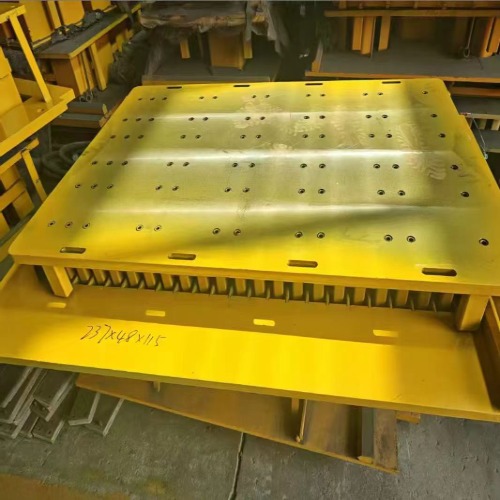
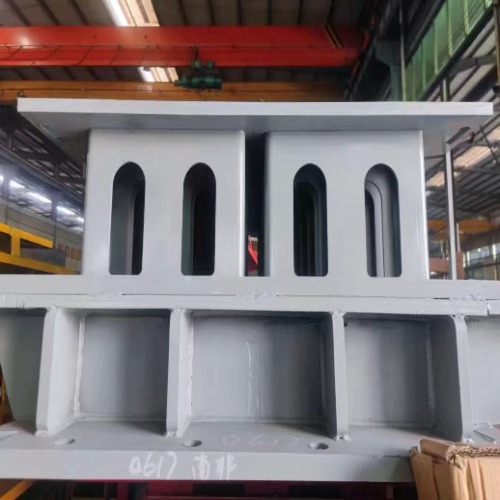
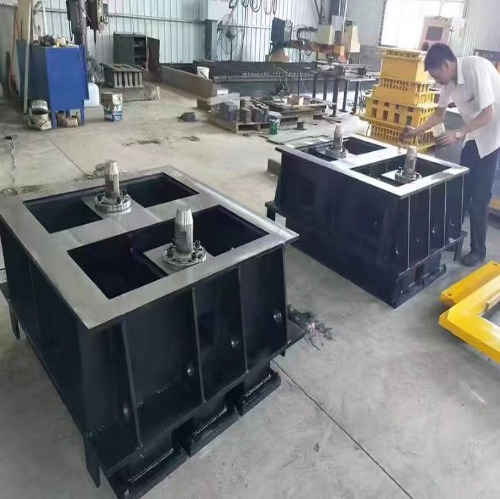
Looking at industry trends, the focus of competition among concrete brick machine manufacturers is shifting from "single-machine production capacity" to "flexible production capability." Downstream customers are no longer satisfied with a machine that produces only one type of brick; instead, they require production lines capable of flexibly handling a diverse product mix and smaller batch orders. The maturation and widespread adoption of rapid mold-changing and low-noise vibration technologies provide the essential equipment foundation for this transition. When mold changes are no longer a burden, and when vibration no longer comes at the cost of excessive noise, the flexible production of specially shaped bricks truly transitions from concept to the assembly line.For more product details, please visit https://www.yxbrickequipment.com